Collection: Tire Recycling Equipment
Recycle scrap tires and wheels with tire cutters, wheel crushers, and bead-notching equipment.
-
'La Desgolladora' TC-125 Tire Cutter
Regular price $91,337.05 USDRegular priceUnit price / per$96,144.25 USDSale price $91,337.05 USDSale -
TC - 50 G Tire Cutter (Gas Power)
Regular price $13,999.00 USDRegular priceUnit price / per$15,499.00 USDSale price $13,999.00 USDSale -
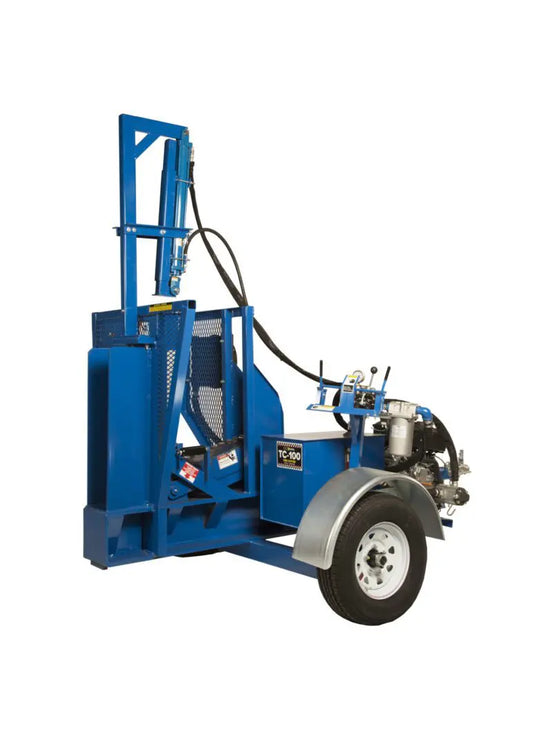
TC-100 G Tire Cutter (Gas Power)
Regular price $27,250.00 USDRegular priceUnit price / per$28,250.00 USDSale price $27,250.00 USDSale -
TC-300 EP Wheel Crusher (Electric Power)
Regular price $19,480.00 USDRegular priceUnit price / per$20,150.00 USDSale price $19,480.00 USDSale -
TC-350 GP Wheel Crusher (Gas Power)
Regular price $33,798.99 USDRegular priceUnit price / per$37,199.00 USDSale price $33,798.99 USDSale -
TC-55 G Tire Cutter 18 HP (Gas Power)
Regular price $22,825.00 USDRegular priceUnit price / per$24,025.00 USDSale price $22,825.00 USDSale -
TC-60 E 3HP Bead Notcher (Electric Power)
Regular price $11,699.00 USDRegular priceUnit price / per$12,999.00 USDSale price $11,699.00 USDSale
Tire Recycling Equipment Guide & FAQ
How to Choose Tire Recycling Equipment
Start with the material and task your operation needs to handle. The tire recycling equipment in this collection supports three different jobs: cutting scrap tires into sections, crushing wheels to help separate and recover scrap metal, and notching a tire bead so the tire cannot be mounted again. These machines are not interchangeable, so the correct choice depends on whether your workflow receives passenger tires, light truck tires, heavy truck tires, construction or farm tires, or complete tire-and-wheel assemblies.
For tire cutting, compare the tire class and expected processing volume before selecting a model. The TC-50 and TC-55 are intended for passenger and light truck tires. The TC-100 expands coverage to passenger, light truck, and heavy truck tires, including super singles. The TC-125 is designed for more difficult construction and farm tires with a sidewall width of 24 inches or less and a rating of 20 ply or less. Always confirm the current limits and configuration on the individual product page.
Power and site requirements are also important. This assortment includes gas-powered tire cutters and a gas-powered wheel crusher, an electric wheel crusher, an electric bead notcher, and a diesel-powered heavy-duty tire cutter. The TC-300 E uses a 220/440-volt, three-phase electric motor, so it should not be selected until the facility’s electrical service has been confirmed. Review tire compatibility, throughput, available floor space, mobility needs, utilities, and delivery requirements before ordering tire recycling equipment.

What is tire recycling equipment used for?
Tire recycling equipment helps salvage yards, tire shops, landfills, retread operations, and other commercial facilities prepare scrap tires or wheels for handling, storage, transport, recycling, or controlled disposal. The exact function depends on the machine. A tire cutter sections tires, a wheel crusher processes complete tire-and-wheel assemblies and helps recover scrap metal, and a bead notcher disables a tire by cutting its bead so it cannot be mounted again.
The seven products in this collection do not all perform the same process. Select equipment according to the incoming material, tire size and type, power source, production volume, and desired output. Product specifications should be reviewed before purchase because capacity and compatibility vary significantly by model.
What is the difference between a tire cutter, wheel crusher, and bead notcher?
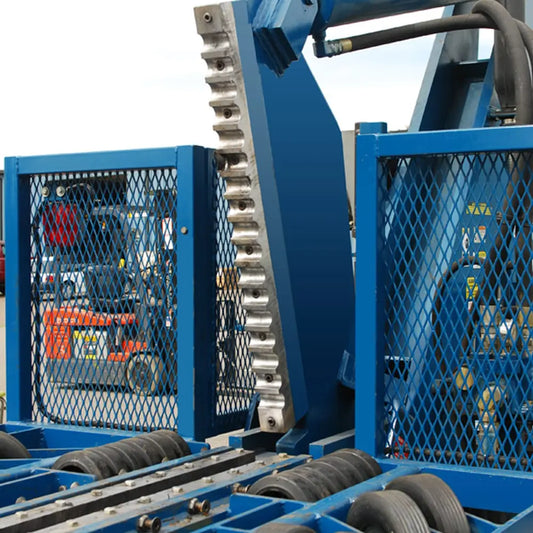
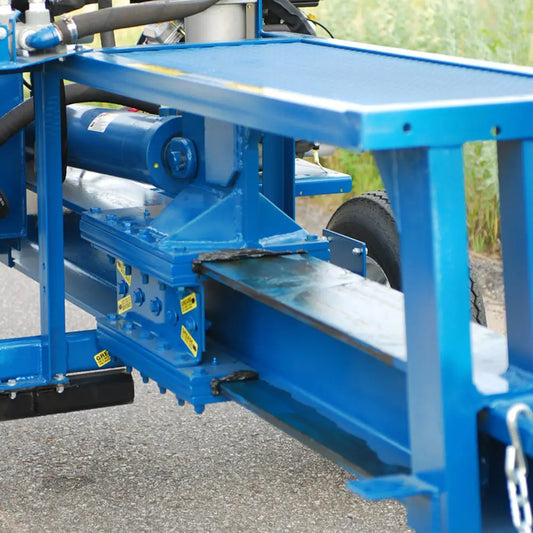
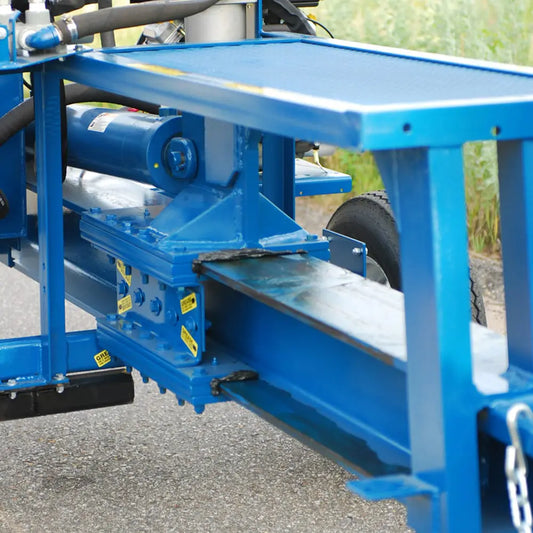
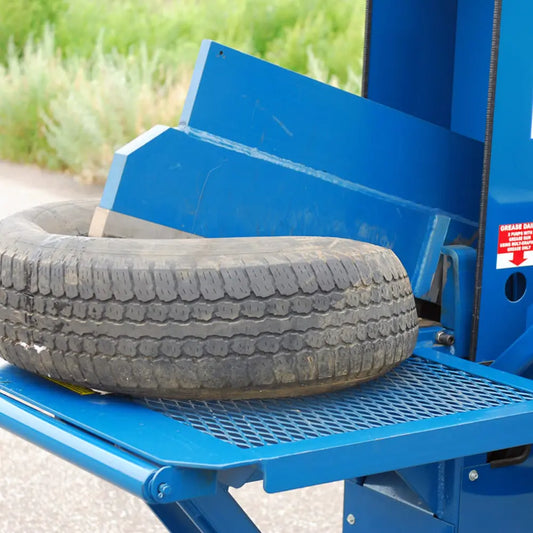
A tire cutter uses shear blades to cut scrap tires into sections. Cutting can make tires easier to stack or nest and can reduce the amount of space they occupy during storage or transportation. The supported tire types and cutting rate depend on the selected model.
A wheel crusher is designed for complete tire-and-wheel assemblies. It crushes the wheel to help separate the tire from old or rusted wheels and recover scrap steel. The TC-300 E is designed for passenger and light truck wheels measuring 19 inches or smaller, while the TC-350 GP is designed for over-the-road truck wheels, including Dayton and Budd types.
A bead notcher does not cut a tire into multiple sections or crush a wheel. The TC-60 E cuts a notch into the tire bead to make the tire unmountable, supporting operations that must prevent a defective or rejected tire from returning to service.
Which tire cutter should I choose for my operation?
Choose according to the largest tire type you regularly process and the volume your operation expects to handle. The TC-50 G is designed for passenger and light truck tires and is listed by the manufacturer at up to 60 tires per hour. The TC-55 G also handles passenger and light truck tires and is intended for higher-volume work within that size range.
The TC-100 G adds heavy truck tire capability, including super singles. The TC-125 is the specialized heavy-duty option for construction and farm tires with a sidewall width of 24 inches or less and a rating of 20 ply or less. Do not select a machine based only on horsepower or price. Confirm tire diameter, sidewall width, ply rating, required output, power source, mobility, and available space against the individual model specifications.
What power options are available in this collection?
The collection includes gas, electric, and diesel configurations, but each power source is tied to a specific listed model. The TC-50 G, TC-55 G, TC-100 G, and TC-350 GP use gas engines. The TC-300 E wheel crusher and TC-60 E bead notcher use electric motors. The TC-125 uses a diesel engine for its heavy-duty construction and farm tire application.
Electrical requirements must be verified before ordering. The TC-300 E is listed with a 10 HP, 220/440-volt, three-phase motor. Do not assume that an electric unit will work with the service available at every facility. Confirm voltage, phase, installation requirements, and any site-specific electrical work before purchase.
Can this equipment turn scrap tires into crumb rubber?
No. The tire recycling equipment currently offered in this collection consists of tire cutters, wheel crushers, and a bead notcher. These machines prepare, separate, section, or disable tires and wheels, but they are not complete shredding, granulation, or crumb-rubber production lines.
If the intended output is tire chips, granulated rubber, crumb rubber, steel separation at a later processing stage, or a complete recycling plant, additional equipment would be required. Define the desired final material before choosing a machine so that a cutter or crusher is not mistaken for an end-to-end recycling system.
Who commonly uses tire cutters and wheel crushers?
The product applications in this collection are designed for commercial operations such as tire shops, service stations, landfills, auto salvage yards, tire recycling facilities, and retread plants. The right machine depends on what enters the facility. A tire shop processing passenger and light truck tires has a different requirement from a salvage yard handling complete truck wheel assemblies or an operation receiving construction and farm tires.
Consider the source and condition of the material, the largest recurring tire or wheel size, processing frequency, storage constraints, and transportation workflow. Those details are more useful than selecting equipment solely by the model with the highest horsepower.
What should I confirm before ordering tire recycling equipment?
Confirm the tire or wheel types and maximum dimensions the machine must handle. For tire cutters, review diameter, sidewall width, ply rating, and whether the operation processes passenger, light truck, heavy truck, super single, construction, or farm tires. For wheel crushers, confirm the wheel type and size. For the bead notcher, verify that disabling the bead is the required process.
Also confirm the power source, voltage and phase for electric equipment, available floor space, mobility or towing needs, expected throughput, unloading method, delivery access, and any installation requirements. Because these are high-value commercial machines, the final configuration should be checked against the live product specifications before ordering.